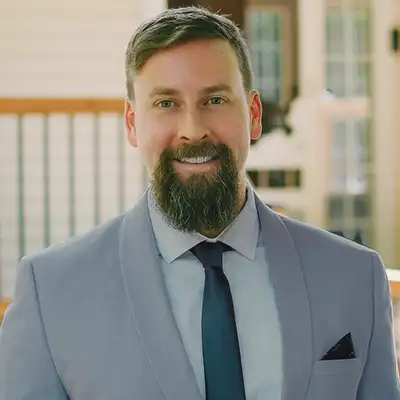
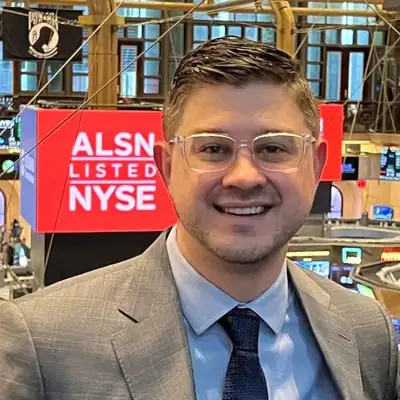
Interview with Brandon Kaisler from Cesta Capital
Hello, everyone, and welcome to another episode of Line Your Own Pockets. Another guest. We got some good guests coming through as well with the we talked about data a couple weeks ago. Now we're talking about brokers and new brokers coming up, which is something that's always interesting for me to talk about and to listen to as a Canadian, because we only have like four, but you guys got all kinds that are trying to do different goals and everything. So I'm very interested for this conversation.
Michael:Welcome Brandon and Dave, I'll let you take it away.
Dave:Yeah. So we've got Brandon Kaisler on here. I'll let you introduce yourself in a second Brandon, but I wanted to let people know how we got here. So a couple of the traders that I coached, in fact, two of them said, hey, I'm thinking about switching brokers, and they mentioned your name. And these two guys have been around a long time.
Dave:They do really well. And so that may that definitely piqued my interest. And one of them said, hey, you should talk to Brandon. This is you know, he's a great guy. He's been in the industry a long time.
Dave:So we had a conversation, and and it was just really interesting to hear you describe your background. So why don't you introduce yourself and tell us who you are and and why you're here and what you're trying to do?
Brandon:Sure. My name is Brandon Kaisler. I have been doing essentially the small cap space for my entire career, which spans roughly eighteen, nineteen years now. And I recently started my own brokerage with the aim of really truly trying to give traders, like, the full experience that they deserve. And so that's kind of where I'm coming into this conversation.
Brandon:Like, I I just really believe in treating your customers well and knowing that if you do that, it will pay off long term for for the broker.
Dave:Okay. Just
Michael:when you talk about the small cap space in general, you wanna just because I know a
Brandon:lot of our trades limit myself to small cap. Don't get me wrong. If you trade large cap, if you trade mid cap, by all means, if you trade ETFs, whatever you trade, I definitely can help. When I say small cap, there's a certain niche out there that typically trades on the short side of small caps. You know, like, every day, every couple days, certain stocks will be egregiously overpriced in the stock market.
Brandon:Right? And there's a lot of people who try to take advantage of that knowing that it's gonna come back and revert to the mean. So that's kind of the space I grew up in. But Mhmm. I don't wanna limit myself to that space.
Brandon:Like, I am definitely perfectly capable of helping you with ETFs and large caps and mid caps as well and options. I do I do
Michael:overpriced is probably the best way to put it. And it's like we all know, like, there's like a handful of tickers that all came into our head of things that were like, no one heard of and 5¢ yesterday, and now they're like $300. And we know eventually they're going back there, which is just a matter of when. So, yeah, there's there's
Brandon:a large timing. Right? Yeah.
Dave:So I guess my first question is, wow, starting your own brokerage, like, it wouldn't even dawn on people that that's even possible. Like, think of the analogy, I see all these I'm a runner and I see new shoe brands coming up all the time. I think, gosh, how is that even possible? Like, there's all these established players. Why in the world would somebody think they could start a shoe company?
Dave:Why in the world would somebody think they could start a brokerage? That seems crazy.
Brandon:Yeah. I think it goes back to my initial message about really truly treating the traders right. I would say that a lot of the brokers currently in the space are a lot of them are very good. They offer a lot of value. But what I'm trying to do is eliminate some of the unnecessary costs to the trader.
Brandon:And then there there are hidden costs basically everywhere in the structure of, like, you know, you pay commissions, you pay locate fees, you pay short interest, you pay margin interest. You pay a lot of fees, right, as a trader, and you have to kind of build that into your model so that you can calculate, you know, am am I going to be profitable? Because, I mean, I think that's the goal of every trader. And my goal is to essentially minimize those fees to the extent possible while still, obviously, as a broker, need to make a little bit of money. But, I'm trying to minimize those fees to the extent possible that really makes the traders profitable.
Brandon:Because, again, my ethos is essentially if you treat the traders well, the traders will take care of you. Like, take care of your traders, the traders will take care you. That's essentially my ethos.
Michael:Well, and and a profitable trader is a much stickier client than someone who comes and, you know, blows up and loses money and then has to come back and refund their account or something like that. If you have someone who's, you know, just hammering away day in and day out and doing fine, then it's just more likely that that person's going to stick around and and be a client or even exist in kind of this trading world that's so hard for for any length of time.
Brandon:Yeah, Michael. That's such a salient point. The success rate we all know with day traders and swing traders is very low.
Michael:Mhmm.
Brandon:Some people have a clock that like ninety percent, ninety five percent fail. And I guess my mission is to try to lower that percentage. Like, if I can help another five percent of traders be successful, then great.
Dave:Yeah. I think that's the mission of this podcast, I think ultimately too. So yeah, I think we're totally aligned there. When we were in the green room before this, we had talked about, Hey, are the people that listen to this are systematic or want to be systematic. And you made the comment, hey, I I really like those guys.
Dave:Why from the brokerage perspective do you prefer API traders or systematic traders?
Brandon:I would say that API traders are 99.9% less likely to emotionally react to a trade in the wrong way. And and what happens, a lot of the time, see the deer in the headlights, you know what's happening, you're trying to get ahold of the customer, they they just won't answer your call, they won't respond to your Slack message, whatever it is, And you're stuck as a broker thinking, well, when do I have to take action to protect myself? So for me, the API and systematic traders have already created their own risk profile, and they don't allow themselves to get in the deer in the headlight situation more often than not. I I mean, maybe there are some that like hit end on the program and stay in the trade longer than they should. But most of them are are really good at managing their own risk.
Brandon:And and the program does that for them because they take the emotion out of it a lot of the time, which we all know is, probably our own human weakness. Like emotion is probably everyone's own human weakness that we have, whether it's in trading or other aspects of reliance. So I that's that's why I really like systematic traders. And I would take take them all, bring them all on.
Michael:So would you say, and this is gonna be like shots fired, I guess, the discretionary community would, you know, seeing all of the math in the background, would you say systematic traders make more money in in total, more consistent, or does it just seem like on average, they're they're better than the just less risky, I guess, than the discretionary counterparts?
Brandon:In my experience, systematic traders are 100% less risky. As far as success goes, I think there's an element to that where they have to have a good plan. Right? So some systematic traders might not have a good plan, and maybe maybe Dave can help with that. Maybe Mike can help with that.
Brandon:But in I don't think I haven't run the statistics on whether systematic traders are more profitable overall. I would say, as a broker, definitely preferred because of minimal risk. And I would also say that if you have a good plan, if you back test, if you do all the things that you need to do before you implement that plan, you're probably going to be in a better place than if you just roll it out and let it run.
Dave:Yeah. So going back to what you said earlier, the the sort of hypothetical that you're calling a trader, they're they got the deer in the headlights. A lot of traders think that brokerages are just, like, commission accepting machines, but you're providing a real service. You're taking risk on the account of your users. So could you kind of walk through that what people might not be aware of and and talk through the like a scenario that you describe like actually what's happening there when the trader's deer in the headlines and they're putting you at risk?
Dave:What's going on there really?
Brandon:Sure. So, like, I'm an introducing broker. I introduced my accounts to Wedbush Securities. And essentially what happens is if your account goes negative, I'm on the hook for it. So when a broker is looking at risk, they're looking at, okay, how much money can I afford to lose on any given client?
Brandon:And and the answer is zero. Right? Like, none of us want to lose money on any given day. No trader, no broker, no clearing firm, anybody. So I'm going through and monitoring risk all day every day.
Brandon:Right? In my case, right now, it's just me. I I am the brokerage firm. I am the only employee. It it's literally what my family is gonna live off.
Brandon:So when I'm mounting monitoring risk, I'm saying, okay, this person is managing the risk well, and this person is not. And so I'm gonna contact the person who's not managing the risk first. We've all seen the parabolic moves. We've all had the deer in the headlights look. But if you manage that risk, if you size down as that is going against you, yes, it limits how much money you're gonna get when it comes back down.
Brandon:We all know it will come back down. But the broker is going to treat you with higher regard as a result of that. Within Interactive Brokers or DaaS, there are now, like, auto liquidate features that also will will take you out at certain points. And I would say the goal of every trader should be never to get to that point. If your broker is liquidating your account, then you're not managing your risk.
Brandon:And that to me is a, not a great client and b, probably not a great trader. Mean, I'm not calling you out. If you've been in that situation and you're a great trader and you've come back from it, I I appreciate you and I respect your resilience, but you should try to avoid getting into that situation.
Michael:Yeah, and many people might hear that comment about auto liquidation and think that that removes the risk off your table and what's the problem. But, you know, if you haven't traded, especially small cap stocks, you don't know that sometimes there is no ability to liquidate them because they just disappear. They're halted.
Brandon:Should we talk about halts?
Michael:There's five minute halts.
Brandon:Every ten seconds?
Michael:Was that Q I remember it was like halting and then opening up like $50 to $100 sometimes higher, the thing just went nuts. And then it just vanished one day. I still think like six months later, it's it's still gone. So, you know, even with auto liquidation features, that's still a whole bunch of risk if you're you're underwater and shorting, in particular, even, you know, buying on margin, yes, you could lose your account plus some margin.
Brandon:I think we should can I bring something up too? Yeah. So one theory that I have, and I I have no data to support this, but the algorithms that auto liquidate within, let's say, Interactive Brokers, those are triggering basically at the same time for a lot of traders. Right? So the entry point that these traders get into these trades is, you know, typically around the same point, they have similar models or methodologies.
Brandon:And so I think what happens and what causes some of these really big issues, especially if we look back at GMC, AME in the COVID era, I think what happens is these algorithms, they're all liquidating at the same time And it's causing much more upward trajectory than there really needs to be. At least on the short side. On the, on the long side, maybe it happens to a certain degree. I just haven't seen it as much.
Michael:It's interesting. It would make sense. Right? Most people are probably taught the same way to do things and and using the same position sizing so the liquidations
Brandon:Similar would technical indicators. Right? Like a lot of people use moving average or RSI or whatever it is, but I think, I don't know. That's my working theory. I have no data to support it.
Dave:Okay. Let's, let's say that we put Brandon in charge. You're the czar of all small cap trading across the industry. You could have, you could put whatever solution you want in place. Do you have any ideas about what might make that better or what, like maybe brokers could collaborate somehow to make it easier on everybody?
Dave:Or what do you think?
Brandon:I mean, like for small cap trading, especially on the short side, I think the fees are the biggest issue when it comes to brokers. I think commissions are so low now that it's almost irrelevant. And I'm not saying that to be self serving. I'm saying that because I know for a fact that brokers make more money on the locate fees and the short interest fees and the margin interest than they do on commission. They just do.
Brandon:As far as like the actual trading goes, I'm stuck between two minds. So first of all, I don't really love the fact that people are trading at 4AM Eastern. Like, I just don't think that the liquidity serves them well. And I I I get that they get lower locate fees when they do it that early, but I struggled to understand because you could have 25 successful trades. You could make a good amount of money, and then one trade could take you out when you trade that early.
Brandon:Because what hap like, you guys have probably seen it. Sometimes what happens is you get into that trade at, let's say, 6AM. And then at 09:30 when the market opens, it it just goes parabolic. And and you're stuck in this trade, deer in headlights, whatever we wanna call it. So I guess if I could be the czar over all small cap traders, all, like, the people who are doing this, I would caution against really early pre market trading.
Brandon:Maybe take the locate if you think it's cheaper and eat the cost if you don't end up shorting it. But I I just
Dave:Would you do anything about the volatility halts? Do you think they're helping or hurting?
Brandon:That's a really good question. I we need halts. Like, at certain points, you just have to, like, correct the market. Whether they're currently structured correctly, I don't know. I don't think that the current structure is working.
Brandon:I think that the the fact that it will halt and then halt again before anyone has a chance to really get out of a a meaningfully sized position is a detriment to traders. I don't think that's fair on the traders. I know that they have the mechanism in place where they get the auction and they're trying to get the price right, where they think the supply and demand meet, but I I don't think they're doing a very good job of it. So for me, if I was a trader and I was short or long and I got stuck in a halt, I would be terrified. I would be absolutely terrified.
Brandon:I mean, those things are so unpredictable that you just don't know when it's gonna turn. I mean, if you just look, it's even worse in the post market. Right? If you just look at GMC, AME during COVID, what happened in the aftermarket decimated millions of bill probably billions of dollars in people's wealth, because brokers were clearing them out. They were deer in headlights.
Brandon:It was a disaster. It was an absolute disaster.
Michael:And yeah, no stop losses or market orders or any of that stuff. The amount of new traders I talked to who don't even realize that, that, you know, hey, I bought this stock and I got a stop loss and it'll be fine. And they don't know that if it's after hours or pre market, it doesn't really matter, right? That traditional order that, you know, most brokers will give you doesn't matter. You know, talking about pre and post market, right?
Michael:We all know what's coming with the whole tokenization twenty four hour environment. Do you think it's just more of the same? Or do you think fast forward five-ten years is are we going to be like crypto where everything's just 20 fourseven and there is no open and close anymore? Or, you know, how's your how's your thought of that on the on the broker side? Because I've just seen, like every day it seems like a new exchange comes out that offers twenty four hour trading.
Brandon:Yeah. So I personally don't offer the overnight trading session yet. I'm definitely open to it. What I think is going on in the current overnight sessions is that there's just not a lot of liquidity. They're mostly large cap stocks that are being traded.
Brandon:It's not it's not the nano cap, small cap space. But I do agree we're on a path to $24.06 at a minimum, probably. And do I think that's good for me as a broker? No. Because I like to try to sleep at night, and that's not great for me.
Brandon:Do I think it's good for the trader? I mean, potentially, but they also probably want to sleep. So I I haven't dealt with crypto traders, first of all. So I can't speak to what the market looks like there and like what alerts they get and how well they sleep. With the stock market, it's already so illiquid in the early morning and the post market.
Brandon:This is only going to in my opinion, maybe to accentuate that, maybe not. Maybe with NYSE and Nasdaq entering the fold, we'll get more liquidity, and then that could be a good thing for traders. That's my hope. It's my hope because liquidity is king. Yeah.
Brandon:I mean, that's what traders need. You need to be able to enter and exit a position effectively. And right now, the pre and post market offers some of that, but not not a lot of it.
Michael:Yeah. And the way that I'm looking at it too is just it's I think it's just gonna widen that divide that you talked about between the, you know, API, the systematic guys, and the discretionary traders even further because, you know, the other guys, if he's up all night trying to make trades, he's gonna be wiped, but that API trader hopefully will just be sleeping like a baby and just having everything kind of fire off on its own.
Brandon:Yeah. As long as they're able to protect themselves with the APIs and hopefully you guys can help them do that. Like I really do think that's your best protection against some of this stuff and be able to sleep at night. I also wanna say without completely going into conspiracy theory that there are there's the possibility when we go twenty four six that the Asian countries could manipulate stocks more than they have been. Like, just if there's a lack of liquidity.
Brandon:If The US market steps up and provides the liquidity, then I think we'll be okay. But I'm just cautioning against people who might choose to trade overnight right now that any lack of liquidity allows for manipulation.
Dave:Yeah. I hadn't thought about that, but, yeah, that's totally right. I mean, it's it's easier to manipulate the less volume there is. It's interesting. So tell me more about LOCATE and you you mentioned that it's one of the biggest costs.
Dave:It does seem like kind of a crazy market behind the scenes there. You see all sorts of variations on prices for locates, like you said, over the course of the day. Tell us what most traders might not know about locates and how they work and, you know, from your perspective.
Brandon:Sure. So when it started, locates weren't a thing. It was you had a short list from your clearing firm or your broker, and that's what you could short. Then a bunch of companies came into the mix and started providing quote unquote locates. And those companies have done very well.
Brandon:They're sourcing these locates from basically kind of like a universal feed. Like, you have to have they, the locate company, has to have a contract with the company who's providing them the the locate. Right? So the company that's providing them the locate is most likely a clearing firm, like inventory in in their in house. And so the more they have, the more clearing firms that they are signed up with, the the more they can get.
Brandon:And then they mark it up from there. What I would say is that when a trader accepts a ridiculously expensive locate, the company sourcing that locate thinks that they can continue to ridiculously charge for the look at. So it all goes back to supply and demand. I know there are certain traders out there just wanna short the stock. Like, they don't care what the price is.
Brandon:They're gonna pay whatever it is. I would caution against that. I would say choose choose your locates more carefully. And it might, if everybody did it, drive the cost down a little bit for the individual traders. As a broker, I I don't really benefit from this.
Brandon:I make a little bit of money on this part of it, but I don't benefit from you paying a higher price. I I want you to get a lower price, but I don't control supply and demand. All of them price it individually. They do not come to me and ask me, what should I price this at? They just put it out there and that's what it is.
Dave:So do different brokers have the ability to offer different or, like, better pricing for locates, or is it is it all coming from the same bucket pretty much? Or how many buckets are there behind the scenes that you can choose from?
Brandon:Yeah. I mean, the buckets behind the scenes are kind of all the same. They're very there's a lot of them. But the broker's choice on what to offer as a price point is almost it's almost entirely up to them. Like, they could mark it up.
Brandon:They could mark it down depending on what costs they're getting. I would say as a trader, again, like, point number one is just don't overpay for locates. And then point number two is compare and contrast, different brokers. So, like, if you have enough money, you could have an account at different brokers or maybe you could try a new broker. There are ways for you to figure it out.
Brandon:So I guess I would probably suggest that. And you should try me.
Michael:Also be good. And, you know, we have we talk about all the time that the importance of a trading community, you know, having, you know, some like minded individuals kind of talking to each other about what you do, because that might be an interesting way to kind of gain information like that on the fly too, be to, you know, instead of having different brokers saying, hey, where you at? And what's this at? And where you at? And what's this at?
Michael:And
Brandon:Yeah. I would I would suggest every trader get at least one trading partner, preferably multiple. I think that trading is a very lonely business if you let it become a lonely business. And bouncing ideas off people is never a bad idea.
Dave:Yeah. So, you mentioned comparing brokers. So I think it's I mean, it's notable. You you here you are saying, sort of being open and saying, compare brokerages, see what's compare the costs. The brokers that I mentioned at the beginning, they're using automation, they're using the trade client that comes with Mabe Kit, and there's a way to control your locate costs in there or how much you're willing to pay.
Dave:But also you can have multiple instances. So what they're doing is they're, they have multiple accounts and they're literally comparing all their costs, fills everything across multiple brokers. So yeah, I think it's cool that you're open to that and say I mean,
Brandon:it's, it's trader goals. Right? Like, to have enough money to have accounts set multiple different brokerages and Yeah. And spread it out so you give yourself the best opportunity to to be successful. And I'm I'm fully aware of it.
Brandon:I've been in this business a long time. So by all means, if you have an account elsewhere, just put a little money with Cesta and try it out. If you like it, great. You can add more money. If you don't like it, then I've failed you somewhere and tell me where I failed you so I can fix it.
Dave:Yeah.
Michael:That's So that's one thing that it's great about, you know, I'm kind of envious. Like, I joked before that there's only like four brokers up here, and that's not it's not far from the truth. Right? Because opening a broker in Canada here is just like the worst possible.
Brandon:Michael, I have spent multiple years researching how to open a broker in Canada. Mhmm. And I can promise you it is very expensive, and it ends up that the ability to control cost is completely different than in The US market. And that's why there are a lot of brokers up there.
Michael:Well, I remember TastyWorks, right? The, you know, TastyTrue. Backing with them, and they gave up. They did it for years and they
Brandon:Tom saw it enough.
Michael:Yeah, he just said, you know what? Enough. So but you know, again, it makes me envious of you guys down there that you can and you should take advantage of it where you should switch. You can move your some money over and and try a new broker and see how it, you know, the fills are and everything compare it, and then if you like it, move more money over, if you don't like it, move money back. Yeah, so just basically to you Yankees down there, take advantage of of that kind of the best you can because we don't all have it.
Michael:We have interactive brokers and other than that you're with a bank paying still like $9.99 a trade if you can believe it. That's still what a lot of us
Brandon:are doing. I take it that's TD?
Michael:Yeah, TD, all the banks have have their own brokers. So yeah, we've got like one or two that you can choose from outside the banks.
Brandon:Would I would recommend petitioning your politicians to change some of the rules because that's why it's so hard and that's why you don't have more competition in that space.
Michael:Yeah. And and, you know, and this is what I like, you know, you're opening up a new broker and and, know, Dave was saying, why new shoes? Why so many shoes? We should have figured out the shoe by now. But that's kind of the beauty of capitalism is that competition and that always having someone kind of nipping at your heels the whole time, kind of makes everything better.
Michael:Right? And that's a bit why we're stagnant in this industry up here and you guys are building all kinds of cool stuff down there.
Brandon:I would argue there are definitely benefits and then there are probably some drawbacks as well to just full on capitalist.
Michael:Well, we we did okay in 2008. I think that's why everyone's still okay with the the insane regulation we have. But, yeah, there's there's certainly draw drawbacks there.
Dave:So you mentioned IB, Interactive Brokers. From our perspective, it seems like they're a big name in the space. It also seems like I always wonder why they don't offer locates any better than they do. I mean, they have a pretty good list, but they don't offer the locates like you can get with a DOS based broker. Why do you think they don't do that?
Brandon:Compliance. That's my simple one word answer. I'll give you a more detailed answer. So the ability to offer these maybe harder to find locates comes with a, added cost, and then b, added scrutiny from the regulators. And so a lot of brokers simply aren't willing to take on that challenge because in an interactive brokers, for example, they have a compliance department.
Brandon:It probably has a 100 employees or something crazy, maybe more than that. And they have to pay all those employees. Then those employees have to become experts on this specific thing that we're talking about in order to prevent the regulators from finding them, you know, x number of dollars. For the brokers who offer these extra low goods, they are smaller with the exception of maybe one or two. And they have somebody who's an expert who can defend them and make sure that they're doing everything correctly.
Brandon:So that's what I would say is just the brokers like IB and TD Ameritrade Infidelity, they simply just don't wanna spend the money that it takes to properly do this business.
Michael:Well, and is it partly too because, like you mentioned that this particular clientele doing this particular thing carries a level of risk? Could it just be part of
Brandon:That's definitely part of the calculus for sure. Yeah. Yeah. I mean, like, we we've seen it. I've seen it so many times in my career.
Brandon:I'm sure you guys have seen it. This is probably the riskiest type of trading that a lot of traders could possibly take on. And if they're not using an API, using proper emotional intelligence with their trades, it becomes a problem in a hurry. And so I think, yeah, 100%, that's part of the calculus of why the big firms don't offer.
Dave:So in a previous episode we did, it's been a few months now. I mentioned a conversation I had with the CEO of another firm. And I asked him, can you lose more money than is in your account? How often does that happen? And what happens then?
Dave:And the answer he gave me, and he did not he said, I could say this, but don't mention who it was. He said, yeah, you can actually lose more money than is in your account. And it happens routinely. And the answer I thought was pretty interesting because he said, when that happens, there's a very strong incentive for the trader to make it right because apparently there's like a loose network of brokers where you'll get on the blacklist and you won't be able to open up an account anywhere if you're, you know, if you've if you've lost an account like this and you haven't made it right with the original broker. Can you shed any light on that?
Dave:Is that true? Is there, what happens when you, when somebody goes through this?
Brandon:Well, now I wish I would have watched that episode. Loose network is probably the best way to describe it. Like what happens is if you lose money with one broker and they you don't pay it back, they might share that information with another broker. And then that broker might choose not to open an account for you. There's no official channel to do that, at least that I'm aware of.
Brandon:The the whole point of it is you're signing off on a legal contract to open an account, to trade. The broker's offering you a service. Hopefully, if you're with the right broker, they're giving you an honest effort to to make things right if something goes wrong. But if you end up going negative and you owe the broker money, they have a right to collect. If they don't collect, they may share that information with other brokers in an effort to make sure that everyone is aware of what type of customer you are.
Brandon:So long story short, call Dave, get an API in place, don't lose more than you have in your account, and just understand. I think I think maybe some traders don't understand that it's a legal contract. They're agreeing that they owe money if they're borrowing on margin and that your broker can liquidate you at any point without calling you, without telling you anything, like your broker has a right to do that. And if they can't do that because of halts or something else and your account goes negative, you owe that money. That's your responsibility legally.
Brandon:So I think maybe because of how, for lack of a better word, gamified some of the stock trading has become. I I just think a lot of people don't understand that this is this isn't a you're an adult, you're signing a legal contract, and you're on the hook if you go negative.
Michael:Well, it's it's funny. One of my favorite memes on Wall Street Bets is someone will post, like, a negative account balance and the the instantaneous response is always just delete the app. And it goes away. So that's what that's what they tell themselves. So you're saying if you if you delete the app, it doesn't doesn't immediately clear out the negative balance?
Brandon:No. That's not how that works. They have your Social Security number.
Michael:There you go. So if this ever makes it to Reddit, that's now you guys now you guys know. I I just think that's hilarious because they they all know, but it's just the most common thing is, hey, if you delete Robin Hood, then they just they'll go away and leave you alone.
Brandon:Ignoring something is not a strategy for resolving something.
Dave:So another question about Interactive Brokers. Probably a lot of listeners, I think, use interactive brokers or are familiar with them. And they're so they're familiar with the IB's smart route that they use. And a lot of traders get by with that just fine. That's sort of my default for my account there.
Dave:At what point or can you talk a little bit about why you would want to send a trade to a specific route other than a smart route? How good is our smart routes and at what point would you want to direct certain trades to specific routes and how do you, how do brokers differentiate themselves based on the routes they provide?
Brandon:Sure. I'm a brand new broker, so I don't have one up yet, but I will have to soon. The brokers all have what's called a six zero six report that you can find on their website. They legally have to publish it quarterly. It basically tells you how much money they're making on any individual route.
Brandon:So I would say IB probably has a lot of payment for order flow on their smart route. And they also can cross internally, which I I don't do at my broker, but that helps them make money too. Let's say you wanna buy at 04:10 and somebody wants to sell at 04:09, they might cross you at you get 04:07, the other guy gets 04:04, and they take the difference. Like, that's how that works, essentially. So they make a spread, you get a better fill than you were willing to pay, but you don't get the fill that you maybe could have gotten otherwise.
Brandon:For sending to specific routes, let's just use Nicey and Nasdaq as an example. So if you send Apple to Nasdaq, then they're probably the most liquid market for now or for Apple. Right? Because that's where they're listed in their market maker. For NYSE, I think who's listed on NYSE?
Brandon:Ford, maybe. Ford is probably the most liquid market there. So that can help you potentially. But Nasdaq and NYSE have charges. Right?
Brandon:And so if you use a smart route, IB probably tells you I'm not gonna charge you. And they're making money on it behind the scenes, but you think, oh, you know, I didn't pay for this. But maybe your fill wasn't quite as good as if you would have sent it to Naussack or NYSE. And that's how it all kind of works. And most traders probably aren't aware.
Brandon:Most traders might not care, to be honest with you. I it if you're a scalping day trader, then it probably means more to you. If you're an API trader, it might mean more to you depending on your strategy. But if you're a swing trader or you're holding long term, it really probably won't make that much of a difference.
Michael:So from the broker side of things, there seems to be like a, like an economies of scale there. When you get big enough that you can cross kind of internally and do things like that. There's like additional money flow source as opposed to, you know, maybe if you can't do that because I I just see that scenario with a small number of traders would be made way more infrequent than the ones with with large numbers of traders and then that that spread difference.
Brandon:Yeah. I mean, I would say definitely economy of scale. I mean, that's what pretty much all brokers are essentially. I I'm trying to do it a little differently, but most brokers are economy of scale. Like, I'll make what I wanna make if I have 2,000 traders or 3,000 traders.
Brandon:I'm trying to do it slightly differently in that I think the experience will be better for my traders if I limit the number of traders. And I think that's advantage for me just because I have the ability to say, I'm gonna do a 100 traders. None of the firms with 2,000 traders are going to fire 1,900 of their accounts. They're not gonna do that. So for me, especially within the experience of being a trader, having someone with my experience help you service your account, someone who understands how it works, being able to offer you the tools you need.
Brandon:I think that's kind of my value add to anyone who wants to give me a try. And like I said before, if you try me and you don't like me, I failed you in some way. Tell me how I failed you. I'll try to fix it. And if I can't, then by all means, move on and try a different broker.
Brandon:For me, I think that it's gotten a little out of hand the way and the way the fees have gone and the lack of quality service. Like at IB, for example, you call, you get a phone queue, you get some guy who's like a level one rep, and he might know the answer. If he doesn't, he's gonna transfer you to level two rep, level three rep, whatever it is. Like, that's how it's gonna go there. If you call me, I am going to be able to help you right away.
Brandon:Like, I'm I might have to call someone else if it's a route issue or something like that, but I will get back to you right away. And I've been doing it for almost twenty years. Like, that's that's another big difference because for a for a trader, I always said this, it's never a problem until it's a problem. Yeah. So if you if you have a routing issue and you call Interactive Brokers, good luck.
Brandon:If you have a routing issue with me, I'm gonna answer on like the first ring and I'm gonna take care of you. Yeah. I
Dave:know. It's I I don't have to or you as a trader, you don't really have to call very often your broker, but when you do, there's you want somebody to answer.
Brandon:Yeah. It's important. Right?
Dave:That's very important. So I like your approach here. I think it's unique, I think it's interesting. So I've got one more question here for you that probably isn't going to directly apply to your business. So what do you think about the PDT rule and the changes that are coming?
Dave:Probably won't affect you directly given the audience that you're targeting, but know, how do you think it's gonna affect the market in general? What sort of changes do you think should happen, if any?
Brandon:So I think with the PDT rule changing, it kinda goes back to what I just said about 2,000 accounts versus a 100 accounts. I think what's going to happen is the companies that adopt it are going to dilute the service that they're able to offer to any individual client. I think that's going to give the client a worse experience. And I think within let's just pretend like we're talking about locates again. Let's pretend like all of a sudden, instead of 2,000 accounts, there are 5,000 accounts taking locates.
Brandon:Well, the the stock of locates is gonna disappear faster. And the way it kinda works, they're kinda like pools of locates that go to each broker. So for me, one of my value adds that I think is going to be very beneficial for my clients is I'm not looking to dilute those locate sources. I'm not looking to dilute my service. I'm looking to really truly look after a trader.
Brandon:That's that's what I'm trying to build. And I'm at the early stages, but the clients I have so far are happy. I think that we're doing well. And I think the PDT rule changing, it might be like a really big inflection point in this kind of niche area if all of the firms choose to adopt it. I am not going to adopt it.
Brandon:I do not want anybody with $5,000 trying to short a stock in my company. I just don't.
Michael:Yeah. And I never, like, we had talked about this a couple of times on the, on the podcast in the past and I never thought about that. So I think I'm less pro the PDT rule going away than I was even just a minute ago. Like we don't we don't have that up up here in Canada, but now I'm starting to think well, you know, it's gonna be even harder to get a hold of Interactive Brokers because when you when you make the phone call, they don't know if your account's a million dollar account or if it's a $2,000 account, so they're gonna pick up the phone just the same. And, yeah, maybe there will have to be either, you know, separate lines for higher net worth clients or even separate brokers that just focus on on higher net worth clients because, you know, they're they're gonna have the same problem and they're gonna need the same help even though, you know, because to them if if that's all you had was $5 in account, in your brain it's as big as an issue as the guy who's got the the million dollars in his account.
Michael:So if the broker treats it all the same, then yeah, I just never thought about the dilution of my service IB, which isn't
Brandon:I could see IB creating new lines for the lower amounts, but you know, those reps are not going to be well, as well educated as the reps who are helping the higher net worth people.
Michael:Well, and they're probably not gonna hire more. Right? They're probably just gonna, like, split them split them evenly or something like that. Yeah. Right?
Michael:So yeah, probably less overall. Well, that's that's interesting. So, know, I the only thing I have to say to you is is, you know, get your ass up here. Know, Tom Sawznoff couldn't do anything.
Brandon:I mean, I tried to tell you. I tried. I, I would love to be in Canada. I really would. I, like I said, I've explored it with other companies and it's just not not quite feasible, especially for me as a startup.
Brandon:Like, I'm just trying to get my feet underneath me right now. And so if anybody watching this wants to try me out, please please do. Cesta Capital.
Dave:Can you please spell that?
Brandon:Let's It's cestacap.com. Cestacap.com.
Michael:And Is there any email or social media or something? If they wanted just to reach out to you directly to ask some questions or?
Brandon:Yeah. Info@cestacap.com is the best email to send to me. I will get back to you right away. I am looking for actively looking for customers. So if you want an honest broker and even if you just want to try me out against your current broker, I'm happy to prove myself.
Dave:Well Brad, I appreciate you coming on and giving us the straight shot here.
Michael:I like the I like the look behind the curtain a little bit. Right? Because it's such a nebulous, you know, I hit the button on the platform and then something happens and I either get the shares or I don't, so seeing and talking about kind of the inner workings of it a little bit, I think has been awesome.
Brandon:I like to make the joke, I'll give you a PhD level education if you just talk to me. This space.
Michael:Use that PhD to come up to Canada and then we'll have have you back on because that's all you need navigate the system.
Brandon:I need customers first. If I get customers, then maybe I'll have some money and I'll try to get into Canada.
Michael:Awesome. Well, if you do, let me know and love to have you back sometime. It's been awesome. And as always, I'm Michael Nauss.
Dave:And I'm Dave Mabe. Talk to you next week on Line Your Own Pockets.
Creators and Guests